بسم اللہ الرحمٰن الرحیم
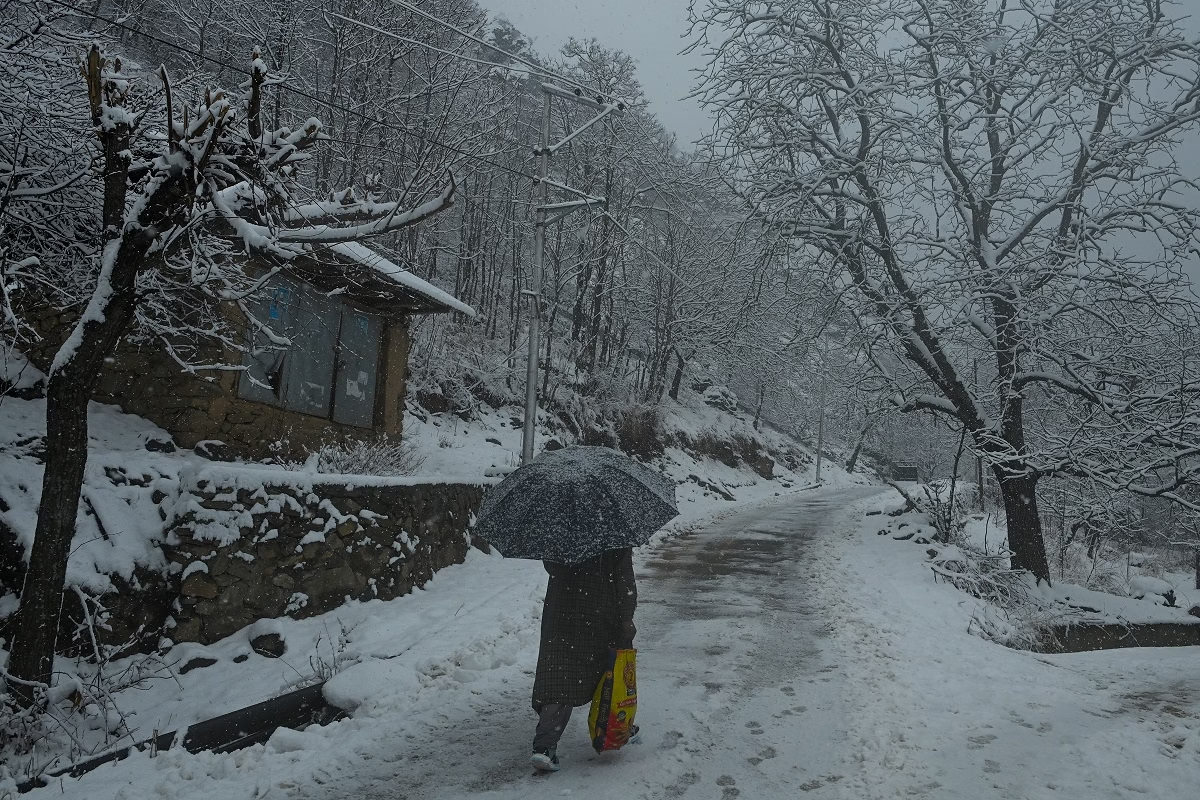
After the recent snowfall in Kashmir, people across various media platforms expressed joy and happiness at the first snowfall of the winter. Pictures and videos were widely shared, reflecting delight in the beauty of nature. This happiness was further enhanced because the snowfall arrived at the right time, fulfilling the natural requirement of the season.
In a similar manner, the advent of the Promised Messiah and awaited Mahdi fulfils a deep spiritual need of the present age. In this context, a couplet of the Promised Messiah (peace be upon him) beautifully reflects the significance of his advent:
کیوں عجب کرتے ہوگر میں آگیا ہوکر مسیح
خودمسیحائی کا دم بھرتی ہے یہ باد بہار
Why do you wonder if I’ve come as the Messiah?
The spring-breeze itself is laced with the messianic spirit
One important aspect that deserves reflection during this snowfall is the reminder of the advent of Imam Mahdi. It is commonly observed that Muslims, in their present state of hardship and distress, frequently raise the call of “Salam ya Mahdi.” However, the symbolism of snow connects with Imam Mahdi not only outwardly, but also inwardly and spiritually.
Instructing the believers regarding Imam Mahdi, the Holy Prophet Muhammad (peace and blessings be upon him), stated:
فَإِذَا رَأَيْتُمُوهُ فَبَايِعُوهُ وَلَوْ حَبْوًا عَلَى الثَّلْجِ ، فَإِنَّهُ خَلِيفَةُ اللَّهِ الْمَهْدِيُّ. (ابن ماجہ)
“When you see him, pledge allegiance to him, even if you have to crawl over snow, for he is Allah’s Caliph, the Mahdi.”
Just as snowfall brings joy, it also brings difficulty and hardship. Likewise, at a time when the Muslim Ummah is surrounded by trials and challenges, serious attention towards the Mahdi becomes even more essential. It is the Messiah and Mahdi who would establish peace and security in the world through divine support and spiritual guidance. The image of crawling over snow also symbolises that the path of allegiance involves patience, sacrifice, and steadfastness.
The Promised Messiah (peace be upon him) also received divine revelation concerning snow and rain, which resulted in a remarkable prophecy. On May 5, 1906, he received the revelation:
پھر بہار آئی تو آئے ثلج کے آنے کے دن
“Then spring came, the days of snow’s arrival followed.”
The Promised Messiah (peace be upon him) recorded this prophecy in Haqiqat-ul-Wahi as the fifth sign of his truthfulness. He explained that (ثلج) ‘thalj’ is an Arabic word meaning snow that descends with cold and rain. This prophecy was published nine months in advance and was fulfilled exactly as foretold, with extraordinary snowfall occurring in Kashmir and parts of Europe and America. In several regions, snow reached a height of three feet during the spring season, astonishing the residents.
Thus, whether it is the prophecy regarding snowfall in spring or the instruction of the Holy Prophet (peace and blessings of Allah be upon him) to convey salam to the Mahdi by crossing snowy terrain, both serve as a powerful invitation to reflection. Those who have not yet accepted the Messiah and Mahdi should sincerely reflect upon these signs and strive to recognise him. Just as people carve paths through snow to fulfil worldly needs, similar effort is required to fulfil spiritual responsibilities.
For those who have already accepted the Promised Messiah and have become members of his Community, the responsibility is even greater. We must shape our lives according to the conditions of Bai‘at, a matter towards which our beloved Imam (may Allah strengthen him with His mighty help) has recently drawn special attention.
Just as snow is distinguished by its purity and brightness, the proofs and truthfulness of the Promised Messiah (peace be upon him) are equally clear, radiant, and pure. One interpretation of the descent of the Promised Messiah at the White Minaret is that his arguments and signs would be elevated and shining. Even the visible whiteness of snow can serve as a reminder of his truth.
Every individual observes nature through their own perspective. The late satirical poet Nazeer Aala-abadi highlighted social realities through humour. Referring to hunger, he wrote:
ہم تو نہ چاند سمجھے نہ سورج ہیں جانتے
بابا ہمیں تویہ نظر آتی ہیں روٹیاں
We neither see the moon nor the sun,
To us, they appear only as loaves of bread.
The Promised Messiah (peace be upon him), on the other hand, was consumed by the love of Allah. To him, even the moon reflected divine beauty. He expressed this spiritual state in the following couplet:
چاند کو کل دیکھ کر میں سخت بےکل ہوگیا
کیونکہ کچھ کچھ تھانشاں اس میں جمال یار کا
Seeing the moon yesterday, I became deeply restless,
For within it shone the beauty of the Beloved.
Snowfall occurs every year in Kashmir and many other regions, but truly fortunate are those whose hearts turn towards the advent of Mahdi-e-Aakhiruz-Zaman during this season. In Kashmir, a common saying reflects this reality:
شین آیا تو دین آیا
“When snow comes, faith comes.”
During snowfall, people naturally turn more towards mosques and religious gatherings. Due to the cold, they assemble in hammams or mosque spaces, engaging in religious learning and discussion.
In this context, Khuddam must devote special attention to the responsibility of Tabligh in light of the guidance given by our beloved Imam in his Friday Sermon of December 12, 2025. Tabligh is not seasonal; it is a continuous and sustained effort that requires sincerity, perseverance, and self-purification. All Khuddam must strive to fulfil this duty while drawing inspiration from the words of the Founder of Majlis Khuddam-ul-Ahmadiyya, Hazrat Musleh Ma‘ud (may Allah be pleased with him):
پھیلائیں گے صداقتِ اسلام کچھ بھی ہو
جائیں گے ہم جہاں بھی کہ جانا پڑے ہمیں
محمودؓ کر کے چھوڑیں گے ہم حق کو آشکار
روئے زمیں کو خواہ ہلانا پڑے ہمیں
No matter the circumstances, we will spread the truth of Islam.
We will go wherever we are required to go.
O Mahmood, we will make the truth manifest,
Even if we have to shake the entire world.
May Allah grant us the ability to understand this message, act upon it, and convey it to the world. Ameen.
Neyaz Ahmad Naik
Sadr Majlis Khuddam-ul-Ahmadiyya Bharat